AUTOMOTIVE / DESIGN / INTELLIGENCE
10 NOVEMBER 2026
The AIUX JournalAI时代的车机交互界面

From operating a car
to shaping an experience.

An in-car AIUX playbook: learning from 豆包, China’s intelligent cockpits, and human-centred design.

How can a vehicle understand what people want to achieve—and make more of the experience happen for them?

Research edition · 10 November 2026

Doubao in-car demonstration showing conversation alongside the cockpit interface
Inside the intelligent cabin. Roewe × Doubao · Xcar demonstration, September 2026.

What does UX become when intelligence can act?

AIUX is the design of how people understand, direct and participate in systems that can interpret a situation, generate a response and take action. The designer’s remit expands to behaviour, relationships and the environment in which an experience unfolds. [1]

When a system can help decide what happens next, every interface makes a choice about agency. What should it take on? What should remain visible? Can its form change with the task? Which acts of participation are worth preserving? In a car, these choices reach from the screen into driving, the cabin and the services around a journey.

Designing the Relationship

The opportunity is to shape how people and intelligence work together—and what that relationship makes possible.

How leading design teams are rethinking UX.

The familiar screen is only one possible meeting point between a person and intelligence. The more consequential question is how that relationship should work.

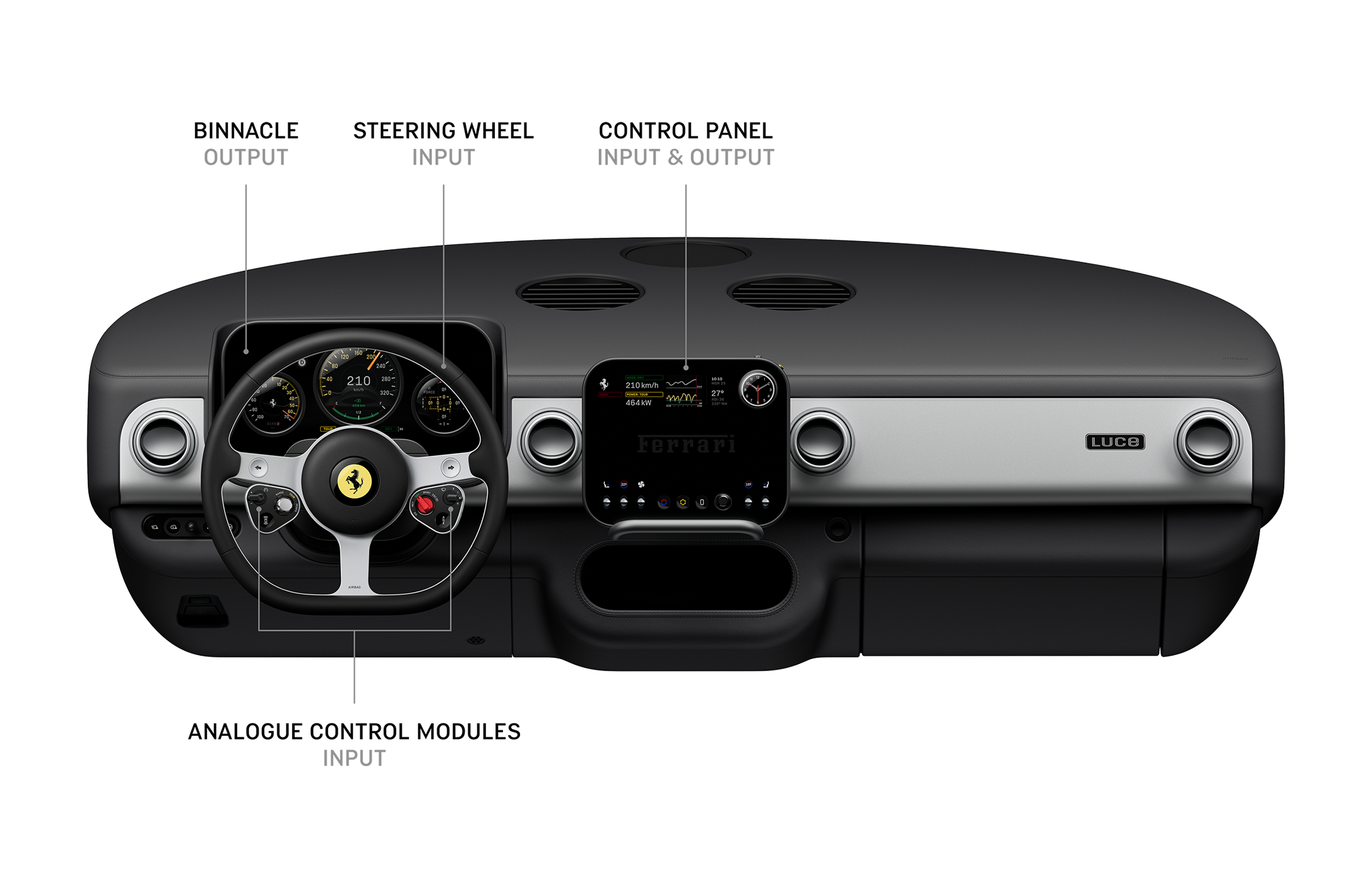
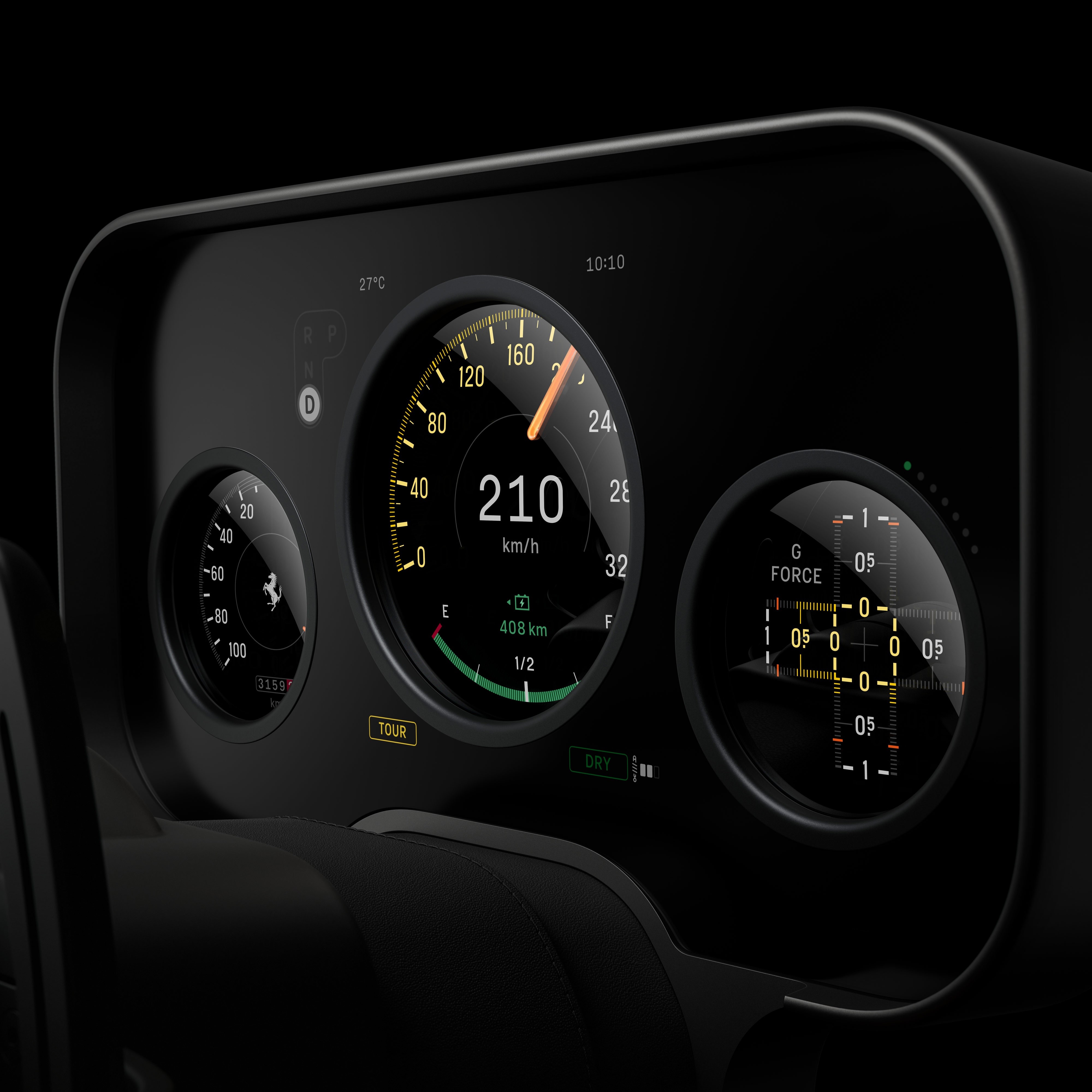
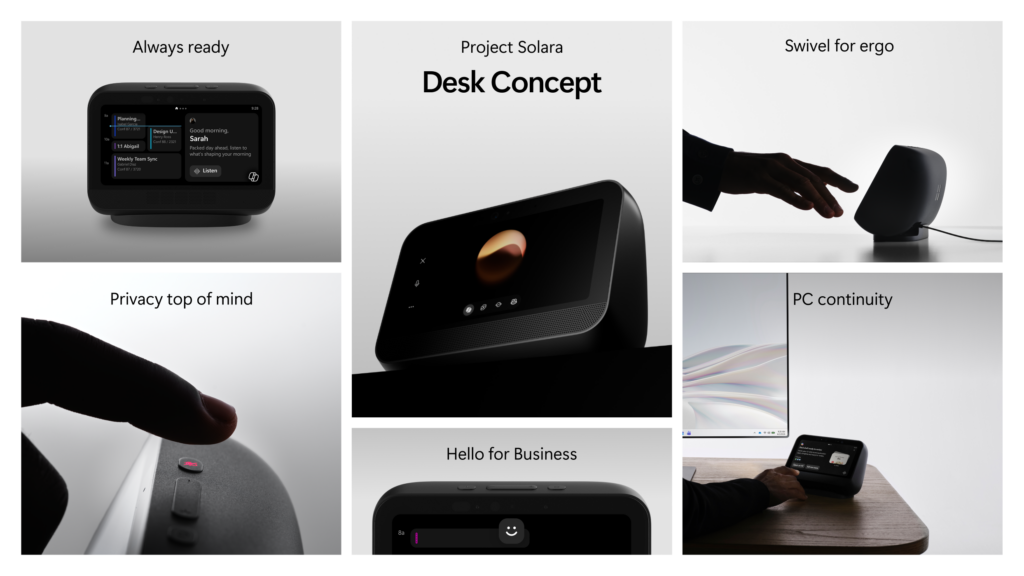
Microsoft explores agents across devices and time. Google investigates interfaces that form around a situation. frog opens the brief to connected environments. LoveFrom × Ferrari supplies a physical-design counterpoint: involvement can be part of the value. Each perspective below pairs original visuals with its implications for the car.

Intelligence changes the whole experience environment.

The brief starts with a human activity. The intelligence comes second.

frog’s The AI Playbook (2020) offers an opportunity map: extended and mixed reality, connected environments, Zero UI and blended intelligence. Its value is the breadth of the brief—how intelligence changes relationships between people, objects and places. [6]
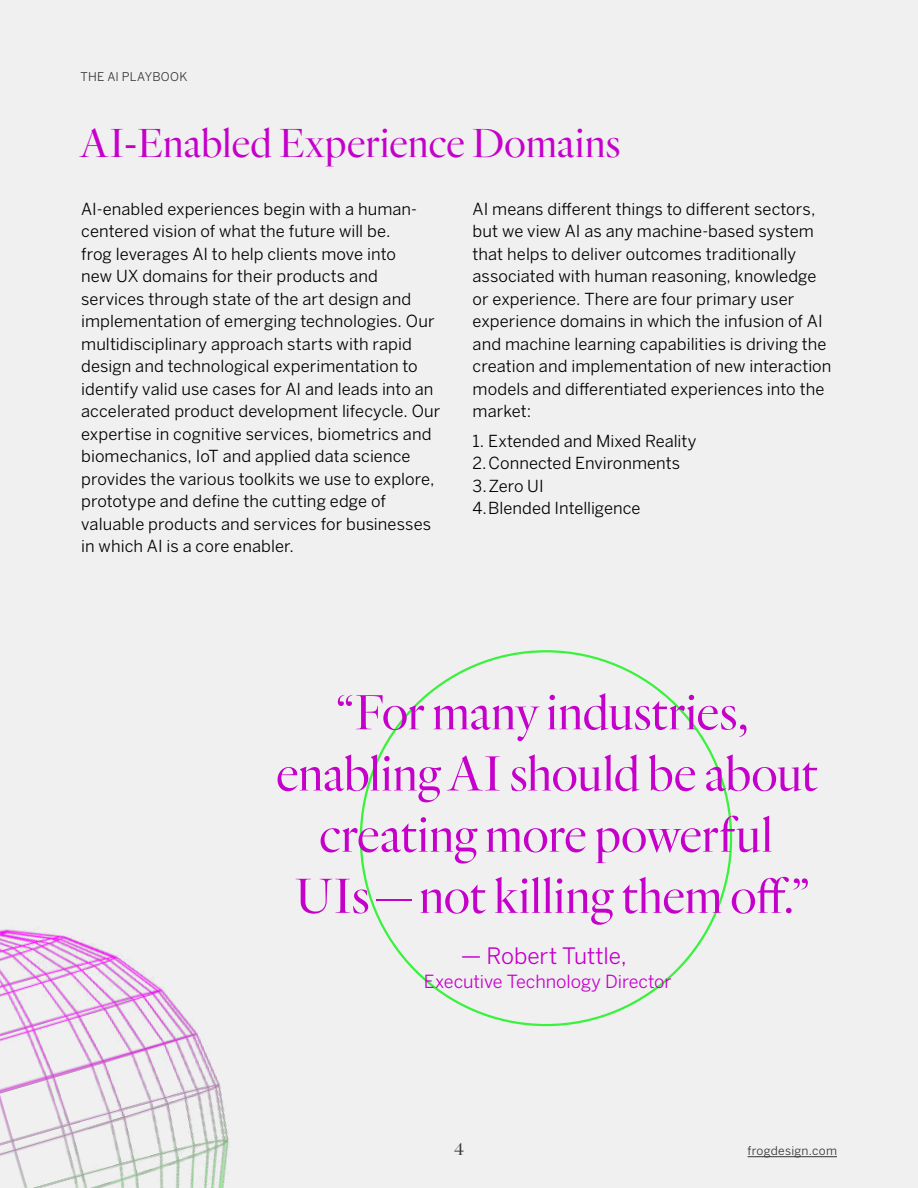
Four experience domains in frog’s 2020 AI Playbook
frog · The AI Playbook, printed page 4. © frog. Open the complete report.

What enters the brief

frog’s four domains—extended and mixed reality, connected environments, Zero UI and blended intelligence—connect people, objects and places. Applied to a car, that brings physical conditions and shared activities into the same design brief as software.

The choice it creates

A wider brief also creates wider responsibility. If the activity depends on light, posture and time, the design team must consider those conditions together. A conversational layer cannot finish an experience the cabin’s physical design leaves unresolved.
Further reading in the original report: connected environments, p. 6; Zero UI, p. 7; blended intelligence, p. 8. The automotive directions above are this journal’s interpretation.

a Foundation for
Automotive AIUX

Choose what intelligence should change—and what it should protect. A coherent experience needs a position on both.

Design references: how the ideas take form.

What does intelligence look, feel and behave like when it enters an experience?

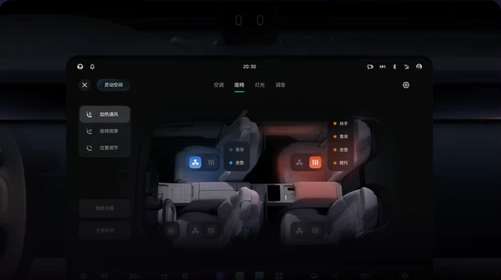
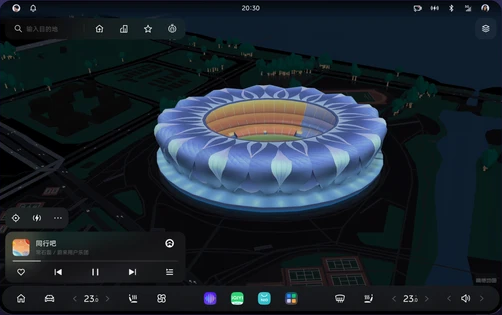
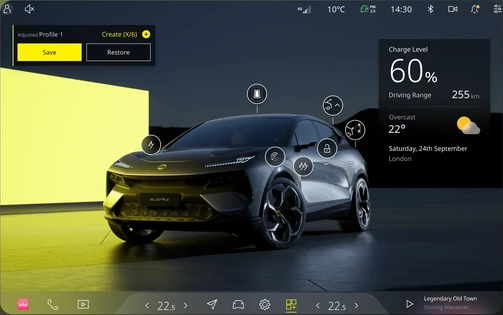
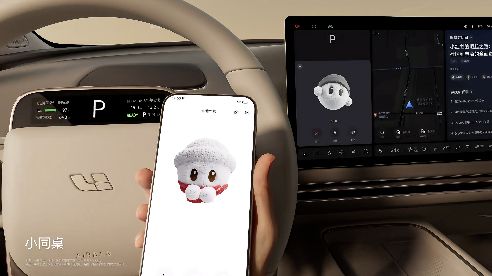
Google × BUCK, MINI, Tesla, NIO, Lotus and Li Auto offer different answers through motion, cabin character, direct control, spatial representation and identity. The screenshots and films below make those design decisions visible. Some show AI interactions; others offer automotive precedents for giving intelligence a coherent form.

Give AI a readable language of activity.

Gemini voice visual treatments: concentrated blue and diffused multicolour gradients
Google Gemini UX × BUCK · original voice-transcription visual treatments. Source.

Play Google’s original motion reel.

Google Gemini UX × BUCK

Google’s design team describes gradients, familiar shapes and directed motion as ways to guide attention and make Gemini approachable. The article credits BUCK as its creative partner. ParkerDesign’s analysis highlights this visual system as a reference for AI interaction. [17]

The transferable idea: motion should tell a person where attention is going and how the interaction is progressing. The specific blue glow is Google’s expression, not a universal AI language.

The limit: the original article discusses illustration and motion. It does not establish that more colours indicate greater reasoning capability, or that a glow proves a vehicle action is complete.

An icon cannot explain the whole task.

Google’s separate icon research involved 2,000 participants across eight countries. The sparkle signalled AI, but did not consistently communicate the precise action. Labels, placement and task context mattered. In a cabin, “AI is active” is less useful than knowing which setting or passenger it is addressing. [18]

Beyond a chat box, with a clear automotive constraint.

Google’s The Next Interface explores layouts assembled around intent, environmental interaction and continuing collaboration. It also describes designers shaping model behaviour through edited examples and rules for visual hierarchy. The article explicitly identifies its featured interfaces as research prototypes and early concepts. [24]

For automotive design, the inspiring possibility is to bring the information and choices needed for an activity together. The constraint is equally important: a changing workspace should coexist with dependable access to frequent controls. The person should not have to relearn where to act whenever the assistant generates a new response.

Explore Google’s research prototypes and design discussion

What changes in the automotive design brief?

An intelligent car changes the division of work, the form of the interface and the experience of participation.

The foundations pose a broad design challenge: decide how intelligence should act, how its intentions become understandable and how the person stays involved. Functions, routines and AI responses are three ways to distribute that work within the same vehicle.

SituationWhat the person suppliesWhat the vehicle takes on
Operate a functionA specific action: adjust the seat or lower the airflow.Execute the chosen action. Direct control remains valuable when the person knows exactly what they want.
Activate a routineA familiar arrangement of conditions and actions.Repeat the saved combination. The owner’s rest scene belongs here.
Work with AIAn intended outcome, possibly with incomplete or conflicting constraints.Help interpret the situation, compose a suitable response and adapt when circumstances change. This is the additional promise to look for.

A request phrased naturally may still trigger a fixed routine. Sending a destination may still be a simple transfer. Neither becomes a new experience merely because an AI assistant appears on screen.

The stronger opportunity arises when someone no longer has to translate a changing situation into separate instructions. The evidence must show what the system interpreted and coordinated, as well as what it said.

the Design Ambition

Shape what the car can take on, how people make sense of it, and which parts of the experience remain theirs to direct.

The Paradigm Shift

China’s examples reveal competing bets on what the car should become. They do not all demonstrate the same kind of intelligence.

Read the five directions below against the distinction between a function, a routine and an adaptive response. The useful question is what each approach makes possible for occupants—and which part of that promise remains to be demonstrated.

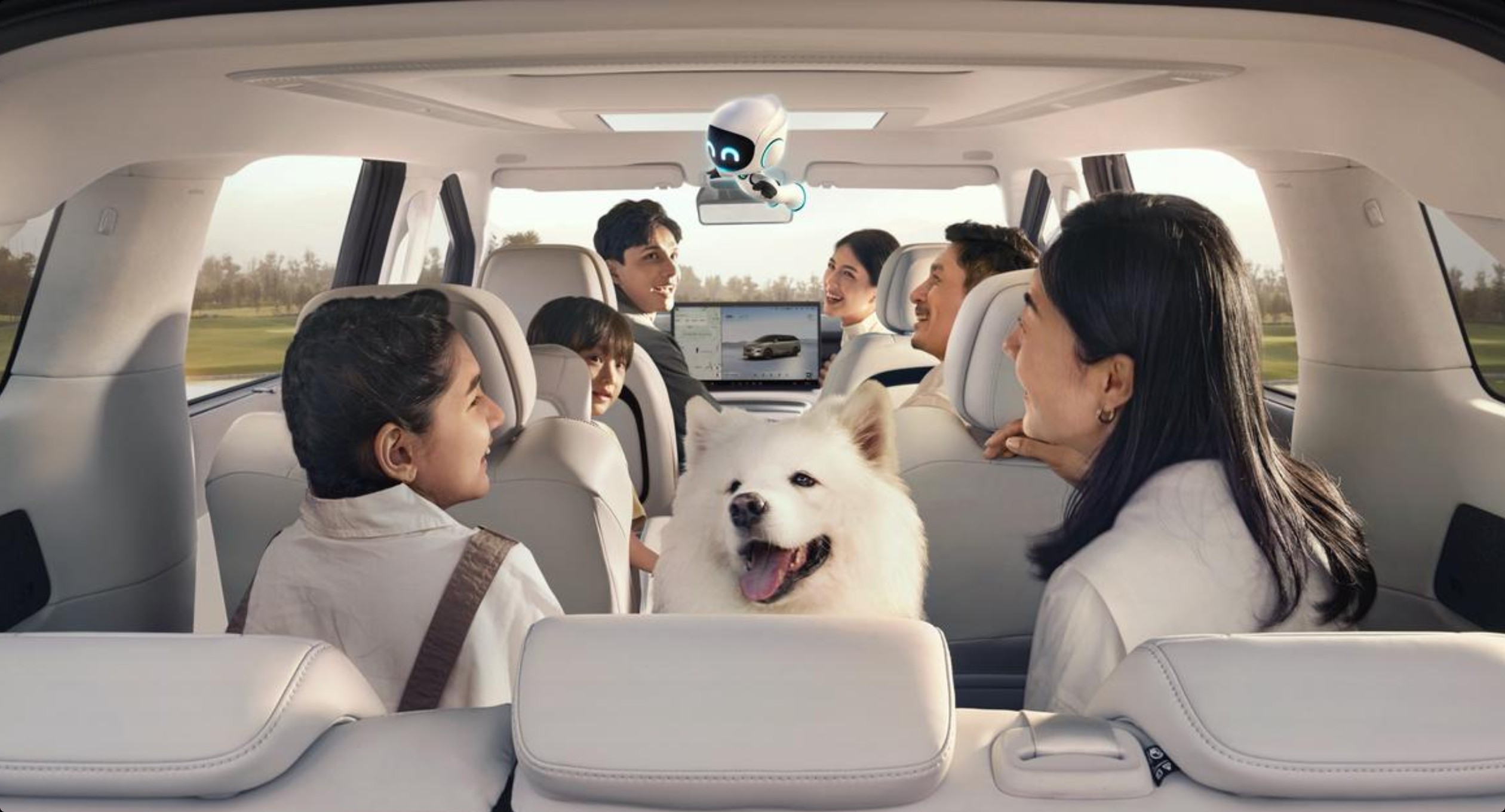
Official XPeng family-cabin visual with occupants, cockpit display and an illustrated assistant
XPeng · A social space with several occupants and purposes. Official promotional visual; the floating character is an illustration. View the source.

Coordination across functions

The reference

SAIC’s Roewe × Doubao account connects language with cabin and navigation services. The rest and family-outing illustrations give that architecture an intended use. [3]

Does the response fit the situation?

Calling several functions is not enough. The useful advance would be selecting and coordinating an arrangement appropriate to the people, purpose and available time.

Routines owners can shape

The reference

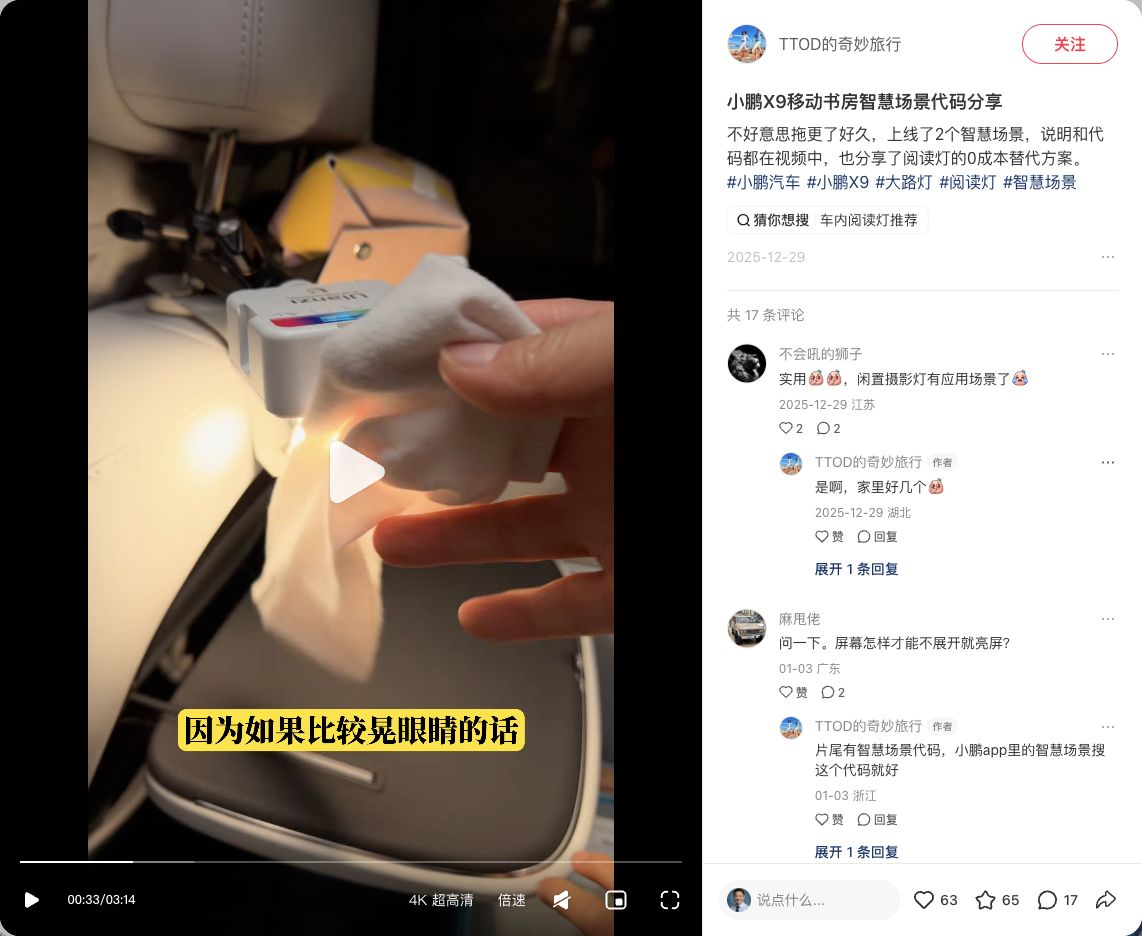
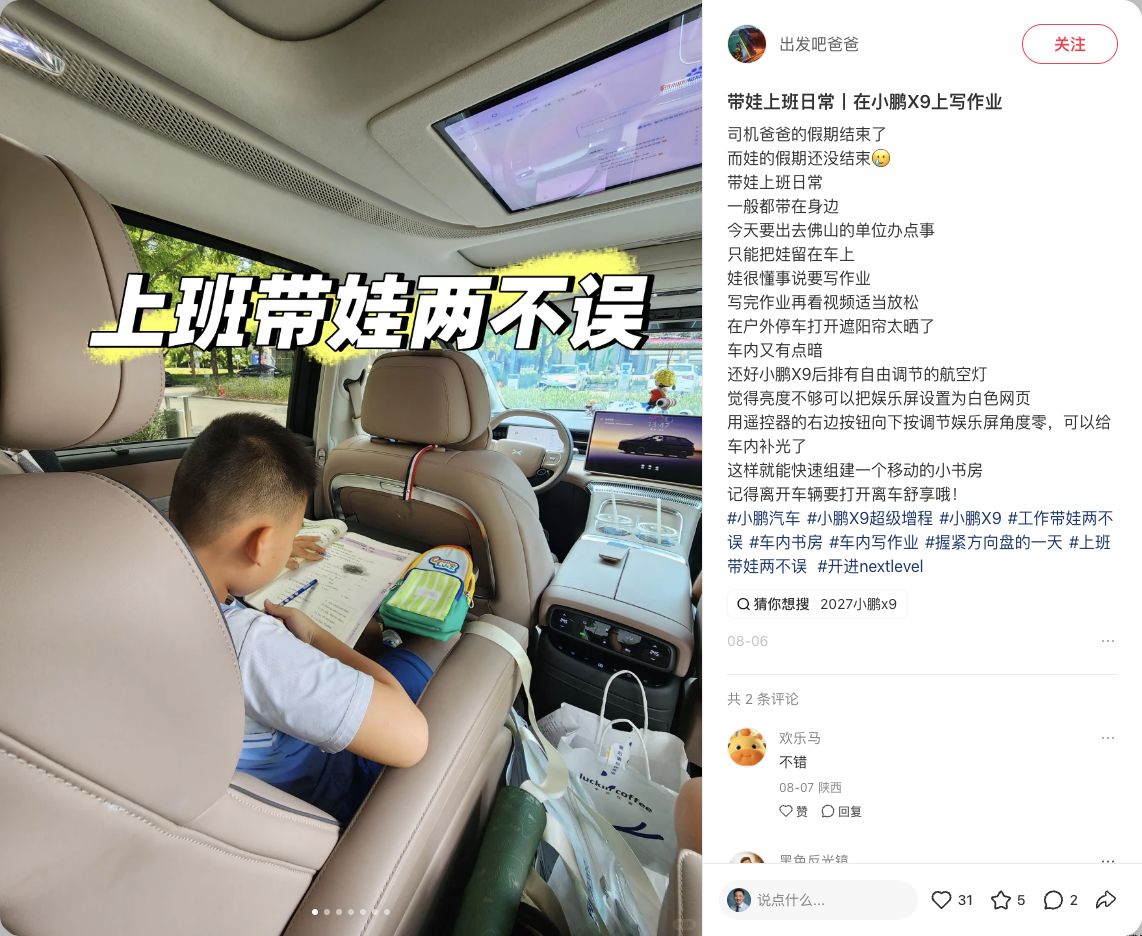
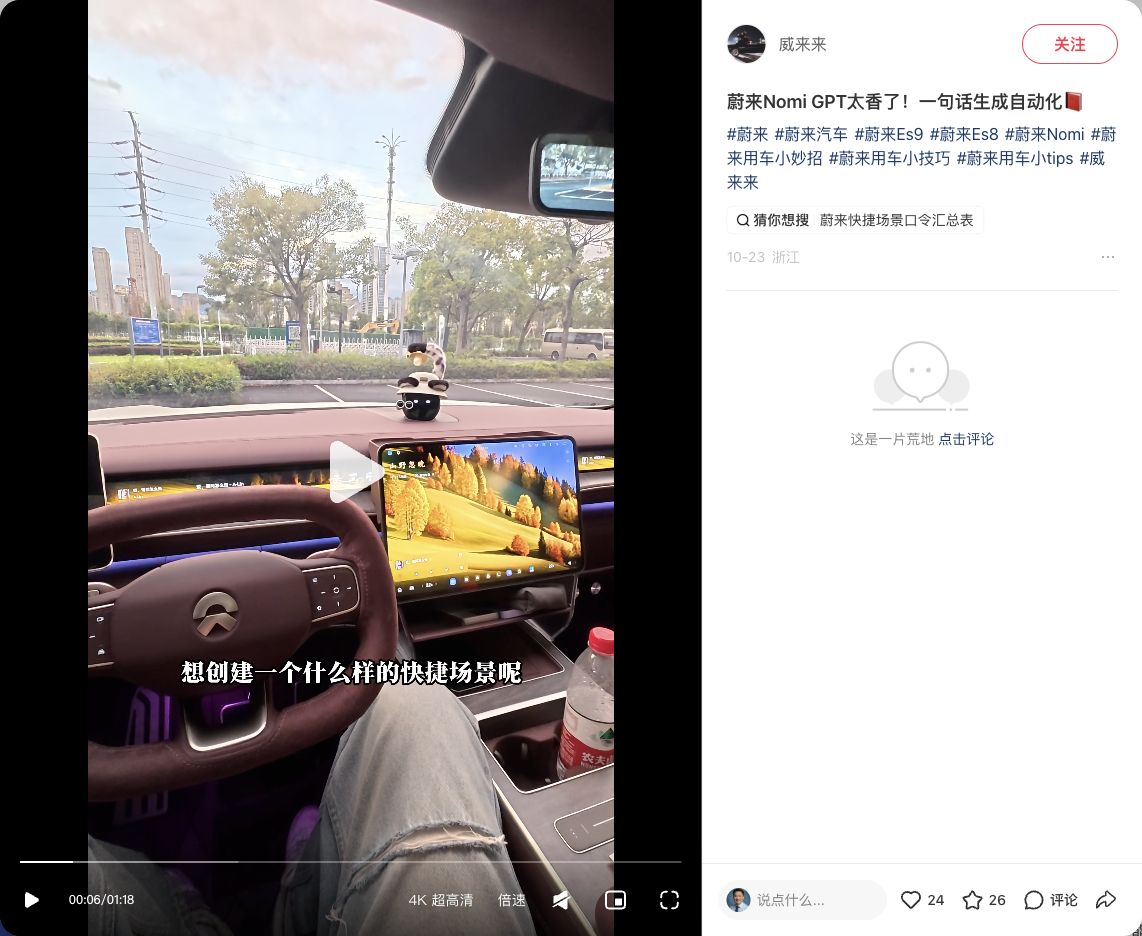
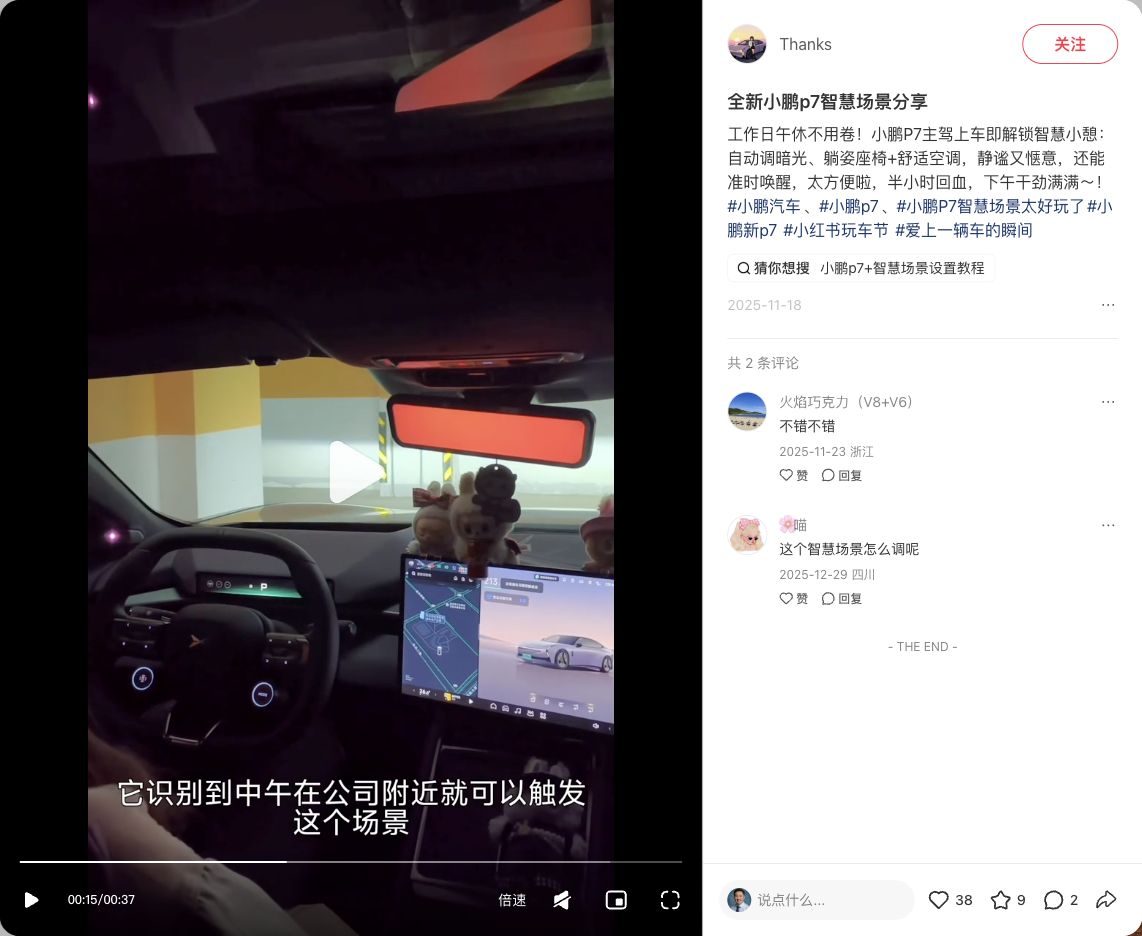
XPeng’s showcase presents personal smart scenes and remote control. The reading setup and homework account show occupants adapting the cabin themselves. [8]

Who gets to author the experience?

A good preset can deliver real value. AI would extend the opportunity if more people could create and adapt a useful arrangement without becoming expert configurators.

An assistant with a recurring role

The reference

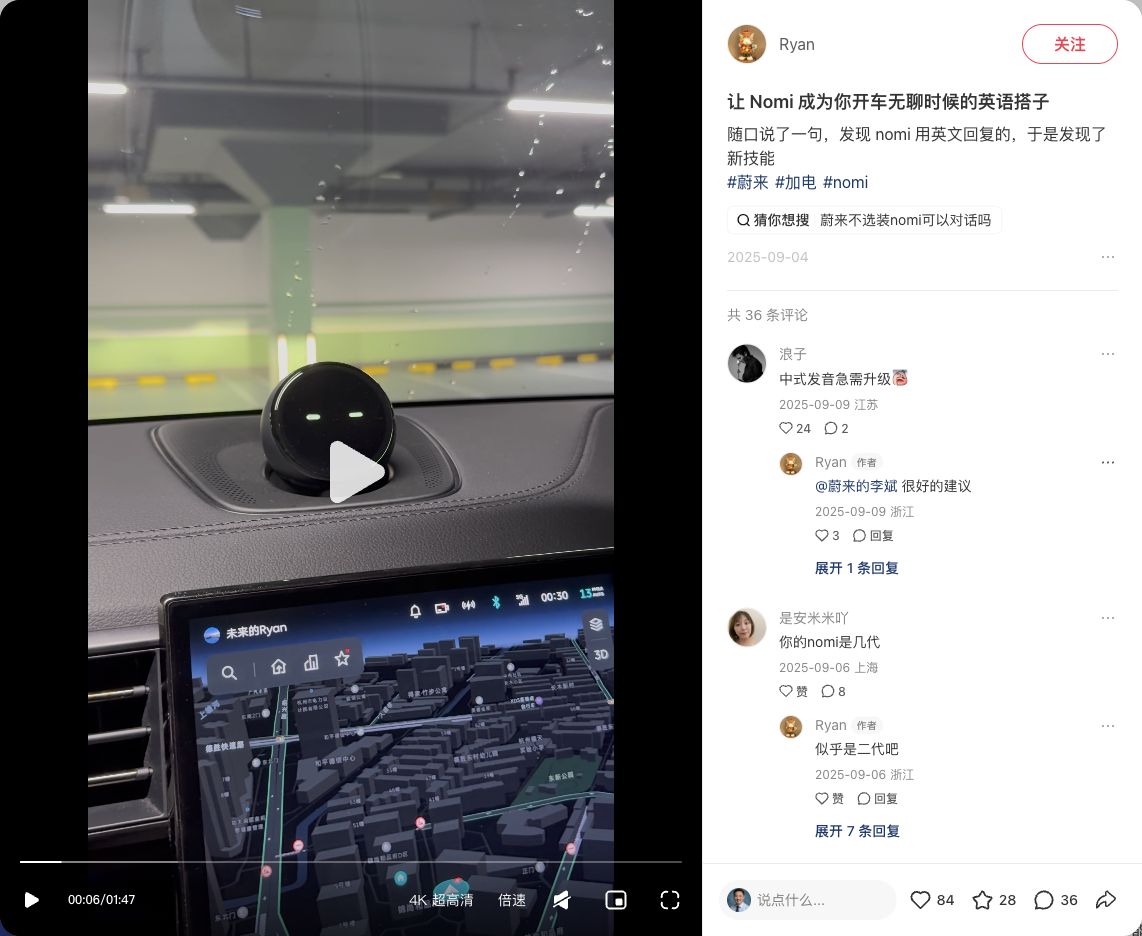
NIO describes NOMI GPT in terms of multimodal perception, cognition and emotion. The practice-partner account gives the relationship a specific purpose. NIO’s account.

What makes the relationship worth returning to?

Once the assistant takes on a role, it must meet the expectations of that role. A companion’s contribution matters more than the novelty of its presence.

Intelligence across the vehicle

The reference

Geely’s Full-Domain AI 2.0 announcement describes shared intelligence across cockpit, chassis, safety and driving domains. This is an architectural proposition. [9]

Will integration be felt by occupants?

Shared computation does not by itself create a coherent service. The experience must bridge the moments and responsibilities that would otherwise fall back to the person.

Activities tied to a place

The reference

Volcengine’s 2024 Lynk & Co competition featured a stargazing cockpit agent. It is a prototype signal of an activity-specific experience. [10]

What does the vehicle uniquely contribute?

Access to a location, a shared view, seating, sound and shelter can combine into a distinctive encounter. The proposal is strongest where those qualities add something a phone alone cannot supply.

How do people actually use an AI cabin?

Car brands sell the promise of intelligence. What do people actually ask of it once the launch presentation is over?

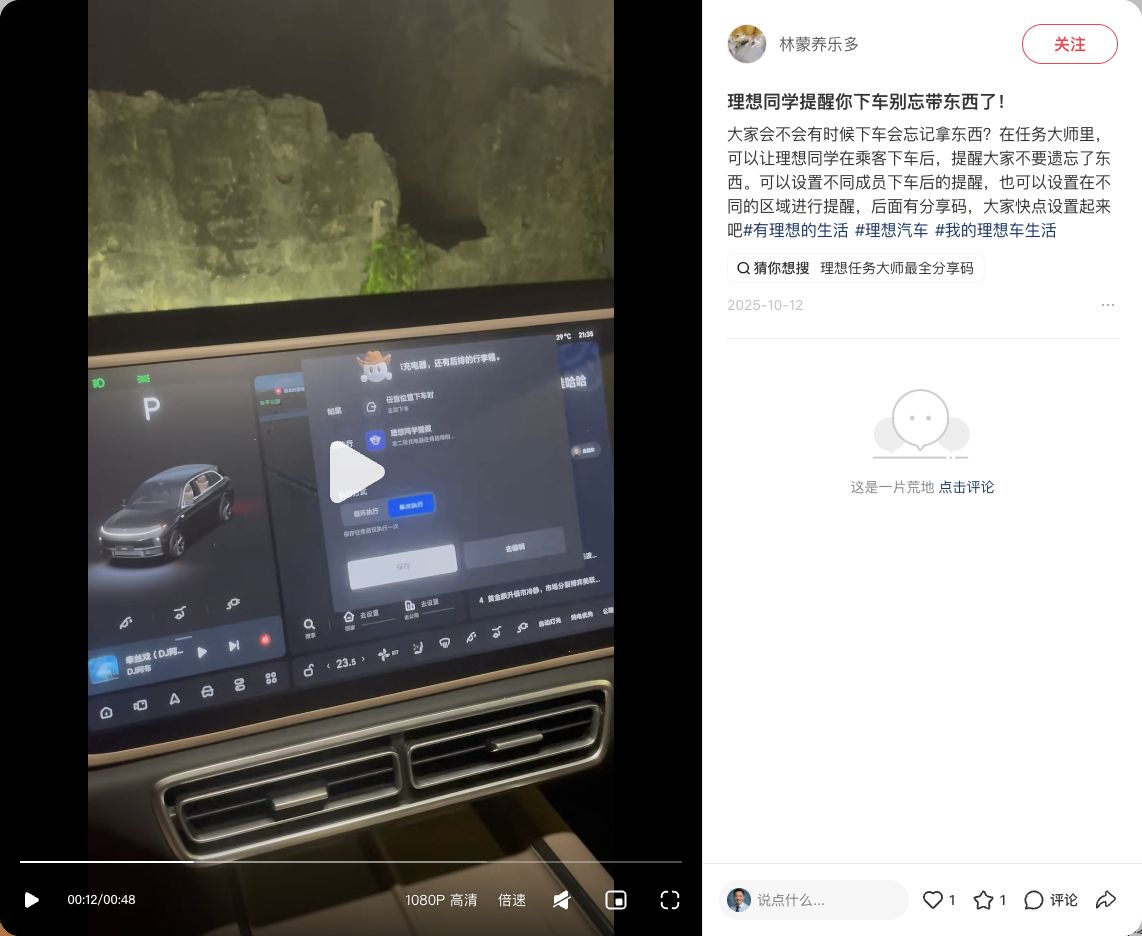
Reading, homework, reminders, personal routines, language practice and rest reveal a movement toward the car as a Third Place. These six accounts mix conversational AI, saved routines and physical improvisation. They show useful purposes for the technology—and where people still assemble the experience themselves.

Third Place: one direction for the cabin

Here, Third Place describes the car’s emerging role as a usable space beyond home and work: somewhere to read, rest, learn or spend time together. It is a working automotive interpretation of the term. The following cases explore this movement through the activities people already bring into the cabin.

This is one application of AIUX. A cabin can serve these activities through good physical design and simple routines; AI may extend what is possible through conversation, interpretation and adaptation. The distinction matters when reading the examples.

Doubao’s illustrated assistant豆包: can an intention become coordinated action?

The next three examples test a larger role for the car: arranging a break, negotiating a family outing and carrying a plan across devices.

Doubao is relevant because its proposition connects conversation with vehicle functions and the phone. The question is how much of the organising work that connection can absorb. These published examples describe the intended experience; the independent video shows a narrower interaction in use.

From language to vehicle actions

SAIC describes the Roewe 家越07 integration as combining cabin cameras, four audio zones and conversational context with more than 2,000 vehicle service interfaces. The stated scope includes cabin controls, navigation and entertainment. [3]

From one speaker to a shared journey

Volcengine adds multi-person conversation, occupant habits and continuity with the Doubao phone app to its proposition. These ambitions extend the brief beyond executing a driver’s isolated command. [4]

Background: model, integration kit and cabin assistant
Three distinct layersWhat to understandStrategic implication
豆包大模型
Underlying model
Can power different OEM assistants and implementations.Shared intelligence can spread widely without creating identical branded experiences.
AI座舱套件
Cockpit solution kit
Reported at the April 2026 Beijing Auto Show alongside the assistant offering; positioned for OEM integration.The automaker can shape the experience around supplied capabilities.
豆包座舱助手
Named end-user assistant
A more complete assistant proposition, including phone–car continuity.The service identity may extend beyond the vehicle itself.

The model, integration kit and named assistant are separate offerings; a Doubao-powered vehicle need not include all three. [2]

The following English readings paraphrase the published Chinese examples. Each separates the request, the proposed coordination and the result visible in the source.

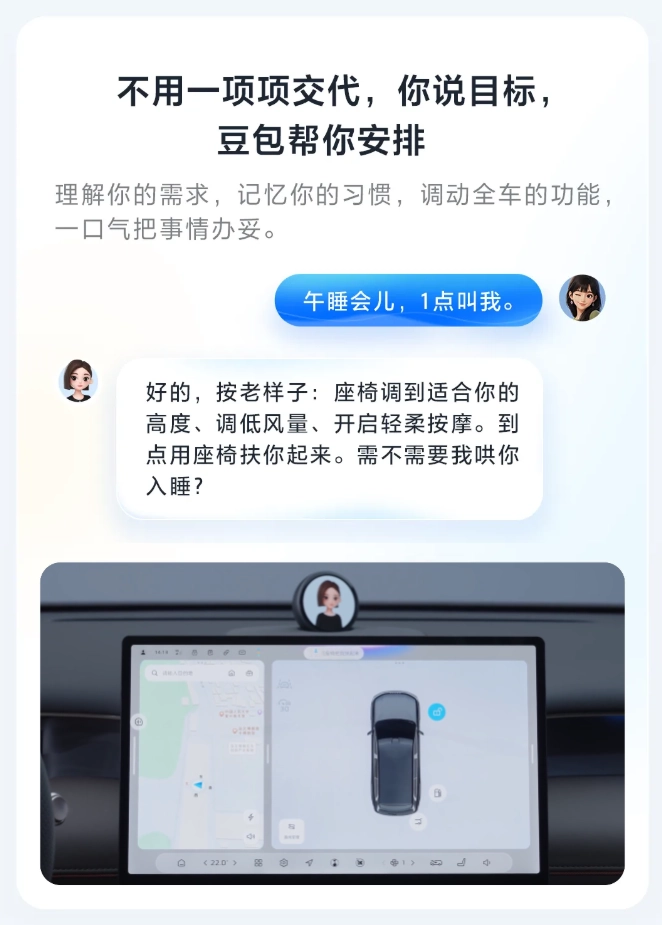
A break, without assembling the cabin

The owner’s rest routine starts with settings. Doubao’s launch illustration starts with a purpose and a wake-up time.

The request
Take a nap and wake at 1 pm.
The proposed response
Use the usual seat position, reduce airflow and start a gentle massage.
The return
Use the seat to help the occupant sit up at the requested time; offer help settling to sleep.
What is shown
A dialogue illustration and cockpit still. The timed return is described, not demonstrated in this image.

The important promise is responsibility for the interval, from settling down to getting up. The illustration does not reveal whether the arrangement is generated or recalled from a routine. Its value would come from fitting the person’s circumstances.

Doubao launch illustration: a nap request with a 1pm wake-up, response describing seat, airflow and massage changes, and a cockpit still
Published launch material. Original Chinese source reproduced by IT之家, 17 September 2026. English reading alongside is a paraphrase.

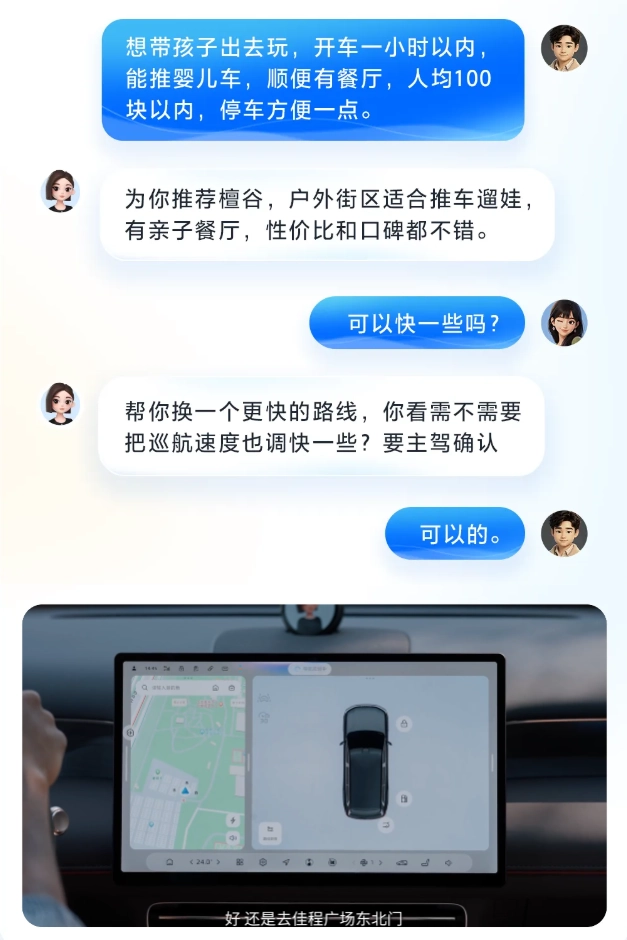
One outing, several people’s intentions

A destination search becomes a shared decision when another passenger changes the requirements.

The request
A child-friendly outing within an hour, with stroller access, food, easy parking and a meal budget under RMB 100 per person.
The negotiation
The assistant proposes a destination. A second occupant asks for a quicker journey.
The coordination
It proposes a faster route and asks the driver to confirm a possible cruise-speed adjustment.
What is shown
A published dialogue and cockpit still. The source illustrates negotiation; it is not a record of an independently observed trip.

This is where interpretation matters: a new preference has to be reconciled with an existing plan. The driver retains a decision about the vehicle. The design problem is to make the group’s priorities and the resulting proposal understandable to everyone.

Published Doubao family-trip example combining several destination constraints, a passenger follow-up request, driver confirmation and a cockpit navigation still
Published launch material. Original Chinese source reproduced by IT之家, 17 September 2026. English reading alongside is a paraphrase.

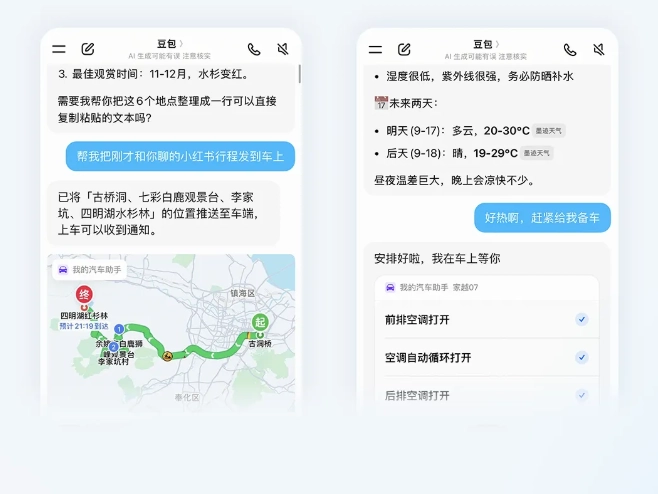
A plan that survives getting into the car

An activity can begin before the vehicle is occupied. The useful handover carries prior work into the next setting.

The request
Send the itinerary developed in the phone conversation to the car.
The handover
The app reports that the destination locations have been pushed to the vehicle, with a notification available on entry.
The preparation
A separate assistant card displays completed climate actions, including front and rear air conditioning.
What is shown
Published app screenshots. They show transfer and action status, not a complete journey across devices.

Continuity becomes valuable when people can act on work already done. These screenshots show one handover. Whether constraints, revisions and unfinished decisions travel with it is the more demanding service question.

Two Doubao app screenshots: sending a multi-stop trip to the car and a vehicle-assistant card with air-conditioning action checkmarks
Published launch material. Original Chinese source reproduced by IT之家, 17 September 2026. English reading alongside is a paraphrase.

What the in-car footage lets us see

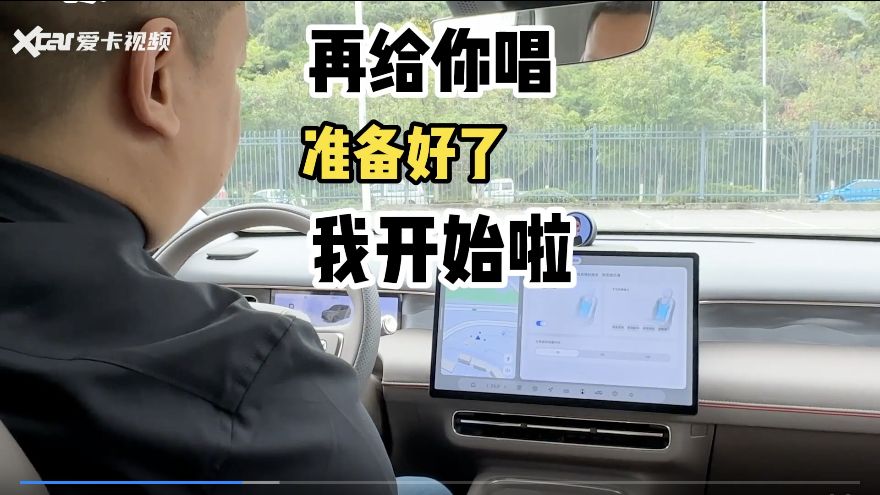
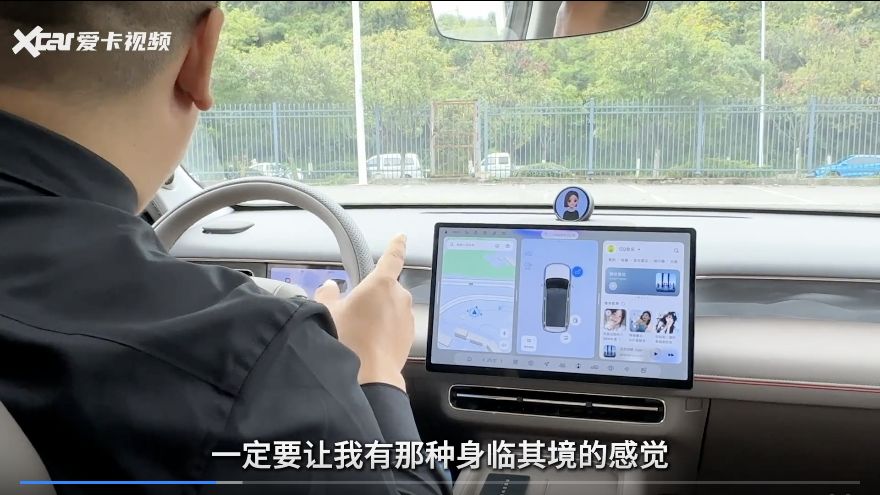
At 01:19, Xcar’s reviewer asks for an immersive feeling. Ten seconds later, seat controls are visible and the video captions announce a vocal performance. The sequence shows a request followed by a changed interface; the quality of the physical experience remains outside the frame.

Xcar video at 1 minute 19 seconds: reviewer requests an immersive feeling; map, vehicle and music panels are visible
01:19 · The request. The reviewer describes the feeling he wants. The display still presents map, vehicle and music information.
Xcar video at 1 minute 29 seconds: the main screen shows seat controls while large editorial subtitles announce singing
01:29 · The later screen state. Seat controls are now visible. The large words are Xcar’s video captions, not the vehicle interface.

Xcar / 爱卡汽车 · original review. Source captions and watermark retained.

Original video

刘征 / 爱卡汽车 · 17 September 2026 · 5:39

Choose a chapter to load and play.

Watch 01:09–01:29 for the surrounding exchange. Open the publisher’s player.

A longer Doubao and vehicle walkthrough

苑叔聊车 / 爱咖号 · 18 September 2026 · 12:53

Choose a chapter to load and play.

At 05:00, follow conversation over the map; at 05:45, hear the reviewer’s assessment. This is a broader vehicle review. Open the publisher’s player.

A different brief for the intelligent car.

Designing UX in the AI era means shaping a relationship with something that can interpret, propose and act. In a car, that relationship has a physical setting and several people to serve.

Third Place is one promising direction for that relationship. Adaptive interfaces, services that continue across devices, spatial understanding and rewarding driver participation open other directions. The design brief must choose which of these possibilities serves a particular person and moment.

Define the relationship.

Decide when the car should act on a person’s behalf, collaborate on a decision or support direct participation. Different moments call for different roles.

Choose the right form.

A conversation, spatial view, generated workspace or physical control each makes a different kind of interaction possible. Let the task and context determine the form.

Connect the experience.

Consider how information, actions and intentions carry across displays, devices and the physical cabin. A coherent journey needs more than a consistent visual identity.

Make the ambition useful.

Test the proposition against something people want to achieve. Third Place scenarios provide one set of human purposes; driving, discovery and arrival offer others.

The AIUX Ambition

What new relationship with the car becomes possible when intelligence can understand, adapt and act—and what should remain distinctly human within it?

Sources and further reading

Product announcements and media demonstrations describe capabilities and interaction flows. Consumer posts provide individual examples of use and unmet needs across several brands; they do not measure prevalence or establish comparative product performance. Research date: 10 November 2026.

  1. AIUX terminology. Practitioner definition; usage is established, popularity is not measured.
  2. April 2026 automotive AI offering and deployment reporting. 每日经济新闻, 24 April 2026; indexed reporting. Offering distinction and supplier-attributed figures. Corroborating indexed coverage: 人民网, 28 April. Counts refer to model-equipped vehicles.
  3. SAIC: Roewe 家越07 and 豆包座舱助手. 22 September 2026. Primary OEM announcement, full text inspected. Capability descriptions are manufacturer claims; promotional “world first” language is not adopted as a finding.
  4. Volcengine: 豆包座舱助手,正式发布. 17 September 2026. Official 火山引擎 account. Written announcement inspected; no claim of full-video testing.
  5. 从“你好斑马”到“豆包豆包”,一声轻唤 十年知意. 8 November 2026. 蓝鲸汽车 article hosted by SAIC; indexed text inspected. Confirms 23 October vehicle launch.
  6. frog — The AI Playbook. 2020. Albert Dang, Ryan Menefee and Robert Tuttle. Printed page references used above.
  7. 艾体验 — AI上车,还能怎么创新?. 2024 trend deck as marked on its cover. All eight slides visually reviewed. Its historical vendor specifics are not treated as a current product inventory.
  8. XPeng — AI-defined vehicle. Official product positioning and supplied visual; current-page publication date unspecified. No assumption of identical capability across models.
  9. Geely — Full-Domain AI 2.0 at CES 2026. 6 January 2026. Official architectural announcement, not a hands-on evaluation.
  10. Volcengine — model capabilities for a smarter cockpit. 1 November 2024. Indexed primary account of the Lynk & Co AI creator competition. Stargazing entry is a prototype/competition example.
  11. Google — Automotive AI Agent for Mercedes-Benz. 13 January 2025. Supplier announcement. Also BMW’s 2026 assistant announcement; official visual retained. Neither used as a country ranking.
  12. 小红书 qualitative evidence record. Authenticated rendered-page pass on 10 November 2026. Original post links accompany each consumer case. Expanded to six illustrated cases in the consumer fieldnotes record.
  13. NN/g — Overcoming the Articulation Barrier Using Hybrid Interfaces. 13 August 2023. Prompt-analysis study and proposed hybrid interface; automotive implications are an interpretation, not a result tested in vehicles.
  14. Microsoft Research — Guidelines for Human–AI Interaction. CHI 2019. Research paper and guideline table reviewed; 49-practitioner evaluation across 20 products. Read the paper.
  15. Google PAIR — People + AI Guidebook. User Needs + Defining Success chapter reviewed; includes automation versus augmentation and assessment of AI’s added value. See [26].
  16. ustwo — Auto and Mobility. Indexed practice overview; also AI practice. Practitioner reference, not deployment evidence.
  17. Google Design — Illustrating the Gemini App. Primary design-team account; credits BUCK. Linked motion reel is hosted by Google. Companion analysis: ParkerDesign, 小红书, four slides; displayed edit date 06-17, year not shown.
  18. Google Design — All That Sparkles Is AI. Rose Pozos and Lennard Schmidt. Reported icon studies with 2,000 participants in eight countries; not an automotive study.
  19. HMI前瞻设计 — AI会控车,手动入口该留在哪?. All 16 slides reviewed. A 32-second public-material analysis of 11 brand/system samples; explicitly not a vehicle test. Displayed 昨天 21:57 on 10 November 2026.
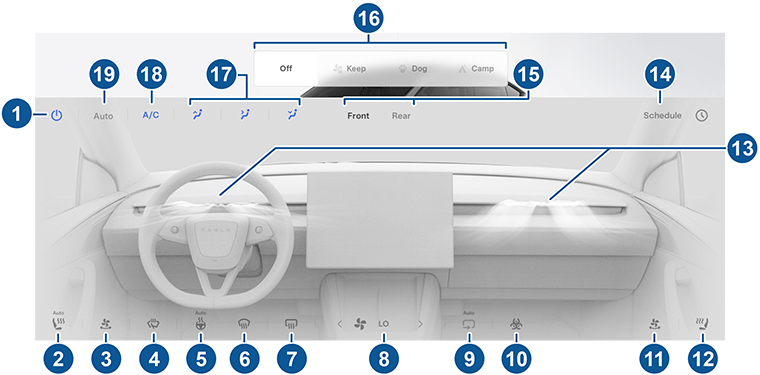
  20. Tesla Model Y Owner’s Manual — Operating Climate Controls. Current online manual branch; control layout and automatic/manual behaviour. The creator’s pictured manual may represent a different model-year/market branch.
  21. Guuuud Design — 还没发现?HMI的设计变了. All six slides reviewed: playfulness, dopamine design, AI, brand and 3D immersion. Displayed 07-01, year not shown. Practitioner curation; original product visuals belong to their creators.
  22. BMW Group — MINI digital experience / Operating System 9. 27 July 2023. Official description of experience modes, assistant visualisations and coordinated cabin expression.
  23. Guuuud Design — 理想同学|HMI设计展示 02. 02:14 design-showcase video, displayed 09-02, year not shown. Selected frames inspected; capture at 00:36.1. Production status of the depicted flows is not established by the post.
  24. Google Design — The Next Interface. Design-team discussion of generative interfaces and human agency. Featured examples are explicitly labelled internal research prototypes and early-stage concepts.
  25. Microsoft — HAX Toolkit, Guidelines, Design Library and Playbook. Toolkit reviewed alongside its library and NLP failure-scenario playbook. Separate from the CHI 2019 research paper at [14].
  26. Google PAIR — User Needs + Defining Success. Full chapter reviewed, including the automation/augmentation distinction and assessment of whether AI adds value.
  27. Apple — Human Interface Guidelines: Generative AI. Rendered page reviewed. Published 9 June 2025; change log updated 8 June 2026. Related viewing: Designing Great ML Experiences, WWDC19 session 803.
  28. IBM Research — Design Principles for Generative AI Applications. CHI 2024. Justin Weisz and co-authors. Research overview and January 2024 preprint reviewed; six principles. Not the earlier 2023 seven-principle version.
  29. Stripe Sessions — A conversation with Sir Jony Ive KBE. 2025. Interview with Patrick Collison; original published transcript reviewed. Designer perspective, not an AI design toolkit or vehicle evaluation.
  30. Microsoft — Composing a new platform for agent-first devices. Steven Bathiche, 2 June 2026. Project Solara platform vision and concept reference devices; not a production automotive system.
  31. Microsoft Design — UX design for agents. 11 April 2025. Space, time and core principles for agentic experiences.
  32. Ferrari — Luce interior and interface. Official rendered design page and vehicle overview reviewed 10 November 2026. LoveFrom/Ferrari cockpit rationale and official images. The automotive AIUX reading is this journal’s synthesis; no AI capability is attributed to the cockpit.
  33. Google — Android XR: Gemini on glasses and headsets. I/O 2025. Official prototype descriptions and spatial navigation video.
  34. Google Research — Generative UI. 18 November 2025. Research implementation, Dynamic view demonstration and evaluation scope.
  35. Mark Weiser and John Seely Brown — Designing Calm Technology. Xerox PARC, 21 December 1995; original essay preserved by Calm Technology. Contemporary comparison: Meta’s April 2025 Ray-Ban updates. The connection to automotive AIUX is this journal’s interpretation.

In this journal